

Worried about how VR, AI, and AR are really changing education? The big idea is that these technologies are moving us beyond textbooks and lectures towards a more interactive, personalized, and engaging learning experience. They’re not just fancy new tools; they’re fundamentally shifting how we acquire knowledge and develop skills, making learning more accessible, effective, and even enjoyable.
Virtual Reality (VR) isn’t just for gaming anymore. In education, it’s proving to be incredibly powerful because it can transport students to places and situations that would otherwise be impossible or impractical to experience firsthand.
Beyond Textbooks: Experiencing History and Science
Imagine learning about ancient Rome not by reading a chapter, but by walking through a painstakingly recreated forum, observing daily life, and even interacting with historical figures. This isn’t science fiction; it’s what VR can offer. Students can explore the Acropolis, witness a dinosaur migration, or even virtually dissect a frog without the mess or ethical concerns. This kind of experiential learning significantly boosts engagement and retention. When students experience a concept, rather than just read about it, they understand it on a deeper level. It moves from abstract information to tangible reality.
Skill Building Through Simulation: Safer and More Effective Training
For fields like medicine, engineering, or even vocational trades, VR offers a safe and hyper-realistic environment for skill development. Surgeons can practice complex procedures repeatedly without risk to patients. Pilots can train for emergency scenarios without leaving the ground. Mechanics can dismantle and reassemble virtual engines. This allows for repeated practice, immediate feedback, and the ability to make mistakes in a consequence-free environment, leading to faster and more effective skill acquisition. The cost savings in materials and equipment can also be substantial.
Empathy and Perspective Taking: Stepping into Another’s Shoes
VR can also be a powerful tool for developing empathy. By placing students in simulated environments that depict different cultures, social situations, or even disabilities, they can gain a deeper understanding of diverse perspectives. Walking through a refugee camp or experiencing a day with a visual impairment can foster compassion and broaden worldviews in a way that traditional media simply cannot. This is crucial for developing well-rounded, globally-aware citizens.
In exploring the innovative landscape of education technology, one can find a wealth of resources that enhance learning experiences and foster creativity. A related article that delves into the intersection of entrepreneurship and education technology is available at Unleashing Your Entrepreneurial Potential: A Guide to Success with Z-Illustrious Startup Toolkit. This piece highlights various tools and strategies that empower aspiring entrepreneurs to leverage technology in their educational journeys, ultimately paving the way for success in their ventures.
Intelligent Tutoring: Artificial Intelligence Tailoring Learning
Artificial Intelligence (AI) in education isn’t about robots teaching classes, but about creating highly personalized and adaptive learning experiences. It’s about understanding individual student needs and responding to them dynamically.
Personalized Learning Paths: Adapting to Every Student
One of the longest-standing dreams in education has been truly personalized learning. AI is making this a reality. AI-powered platforms can analyze a student’s performance, identify their strengths and weaknesses, and then—crucially—adapt the learning material, pace, and teaching methods to suit their individual needs. If a student is struggling with a particular concept, the AI can provide additional resources, different explanations, or more practice problems. If they’re excelling, it can offer more challenging material. This moves away from the “one-size-fits-all” model of traditional classrooms.
Automatic Grading and Feedback: Freeing Up Teacher Time
AI can take on many tedious, repetitive tasks that consume valuable teacher time. Automated grading of multiple-choice questions, essays (using natural language processing), and even coding exercises is becoming increasingly sophisticated. More importantly, AI can provide immediate, specific, and actionable feedback to students. Instead of waiting days for a teacher to mark an assignment, students can receive instant insights into why an answer was incorrect or how to improve their writing. This immediate feedback loop is vital for effective learning, allowing students to correct misconceptions before they become entrenched. Teachers, in turn, can focus on higher-level instruction, individual mentoring, and complex problem-solving.
Predicting Student Success and Identifying At-Risk Learners
AI algorithms can analyze vast amounts of student data – attendance, assignment scores, participation patterns, and even engagement with online resources – to predict academic success or identify students who might be at risk of falling behind. This early warning system allows educators to intervene proactively, offering support and resources before a student experiences significant difficulties. It’s about prevention rather than reaction, leading to better student retention and higher overall achievement.
Bridging the Gap: Augmented Reality Enhancing Reality
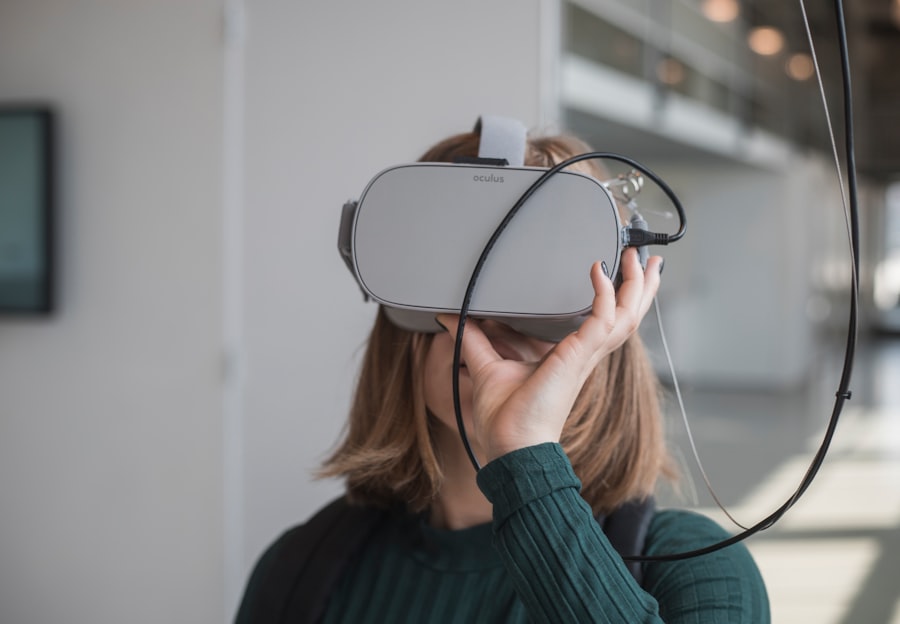
Augmented Reality (AR) takes a different approach than VR. Instead of fully immersing users in a simulated world, AR overlays digital information onto the real world, enhancing what we already see and interact with.
Interactive Textbooks and Live Demos: Bringing Learning to Life
Imagine holding up your phone or tablet to a textbook and seeing a 3D model of a human heart appear, pulsating and rotating, allowing you to manipulate it and see its various parts. Or pointing your device at a real-world object – say, an engine – and having labels, diagrams, and video explanations appear directly on top of it. This is the power of AR in education. It transforms static content into dynamic, interactive experiences. It can bring abstract concepts into the tangible world, making them easier to grasp and explore.
Hands-On Exploration and Scientific Visualization: Deeper Understanding
AR can create interactive experiments and visualizations that are difficult or impossible to conduct in a traditional classroom. Students can project a virtual planet into their classroom and observe its orbits, explore a virtual chemical reaction on their lab bench, or even “see” electromagnetic waves in action. For subjects like physics, chemistry, and biology, this ability to visualize and interact with phenomena directly in their environment significantly deepens understanding and sparks curiosity. It’s about moving beyond mental models to actual visual interaction.
Field Trips and Contextual Learning: Digital Information in the Real World
AR holds immense potential for field trips and contextual learning. Imagine visiting a historical site and, by looking through an AR-enabled device, seeing reconstructions of how the site looked centuries ago, or hearing historical narratives tied to specific locations. In a biology class, a walk through a local park could be enhanced with AR overlays identifying plants and animals, providing information about their ecosystems and behaviors. This kind of contextual learning makes information much more relevant and memorable, connecting classroom knowledge to the real world.
Practical Implementation: Overcoming Challenges and Maximizing Impact
While the potential of VR, AI, and AR in education is immense, their successful integration requires careful planning and addressing practical challenges. It’s not as simple as buying some new gadgets.
Infrastructure and Accessibility: Ensuring Equity
One of the biggest hurdles is ensuring that all students have access to the necessary technology and robust internet connectivity. Schools, especially in underserved areas, may lack the infrastructure or funding for high-end VR headsets, AR-enabled devices, or the powerful computing resources needed for certain AI applications. Addressing this digital divide is crucial to ensure these technologies don’t exacerbate existing inequalities. Solutions might include government funding initiatives, grants, public-private partnerships, and focusing on more affordable and widely accessible devices or web-based solutions where possible.
Teacher Training and Curriculum Integration: Empowering Educators
New technology is only effective if educators know how to use it seamlessly and integrate it meaningfully into their curriculum. Teachers need proper training, not just on how to operate the hardware and software, but also on pedagogical best practices for using these tools to achieve learning objectives. This means developing new lesson plans, understanding how to facilitate VR experiences, interpreting AI-generated data, and designing AR-enhanced activities. Ongoing professional development and dedicated support are vital to ensure teachers feel confident and competent in leveraging these new tools. Without it, the tech will simply collect dust.
Content Development and Quality Assurance: Beyond the Gimmick
For these technologies to truly revolutionize education, we need high-quality, pedagogically sound content. Developing engaging VR simulations, intelligent AI tutors, and accurate AR overlays requires significant investment and expertise. There’s a risk of “gimmicky” content that offers novelty without real educational value. We need collaboration between educators, instructional designers, content creators, and subject matter experts to ensure that the material created is accurate, aligns with learning objectives, and is genuinely effective in promoting student understanding and skill development. This is a crucial area that requires significant attention and investment.
In today’s rapidly evolving educational landscape, the integration of technology has become essential for enhancing learning experiences. For instance, tools like interactive learning platforms and virtual classrooms are transforming traditional teaching methods. If you’re interested in exploring how technology can aid in financial decision-making for startups, you might find this article on navigating financial decisions particularly insightful. You can read more about it here.
The Future Landscape: Reshaping the Learning Experience
| Education Technology | Benefits | Challenges |
|---|---|---|
| Online Learning Platforms | Flexibility, accessibility, personalized learning | Technical issues, lack of face-to-face interaction |
| Interactive Whiteboards | Engaging lessons, multimedia integration | Cost, maintenance, training |
| Learning Management Systems | Centralized learning resources, communication tools | Complexity, implementation challenges |
These technologies aren’t just incremental improvements; they represent a fundamental shift in how we approach learning and teaching. They are ushering in an era of unprecedented personalization, engagement, and accessibility.
Lifelong Learning and Upskilling: Adapting to a Changing World
In a rapidly evolving world, lifelong learning and continuous upskilling are no longer optional. VR, AI, and AR can play a pivotal role here. VR simulations can train employees for new roles or complex machinery. AI can curate personalized learning pathways for professionals looking to acquire new skills or certifications. AR can provide on-the-job guidance and real-time support. These tools make acquiring new knowledge and adapting to new demands more efficient and effective, empowering individuals to stay competitive in a dynamic job market.
Global Collaboration and Remote Learning: Breaking Down Barriers
The pandemic highlighted the critical need for effective remote learning solutions. VR, AI, and AR offer powerful ways to enhance distance education. VR can create shared virtual classrooms where students from across the globe can interact and collaborate in immersive environments. AI can provide personalized support and feedback to remote learners, ensuring they don’t fall behind. AR can bring interactive elements into students’ homes, bridging the gap between physical and digital learning spaces. These technologies can democratize access to quality education, regardless of geographical location.
Redefining the Role of the Educator: From Lecturer to Facilitator
As AI takes on more of the individualized instruction and assessment, the role of the human educator will evolve. Rather than simply delivering information, teachers will become facilitators, mentors, and guides. They will focus on fostering critical thinking, creativity, problem-solving skills, and socio-emotional development. They’ll interpret AI data to provide targeted support, design engaging VR/AR experiences, and lead discussions that deepen understanding. The human element in education remains irreplaceable, but its focus shifts to higher-order skills and personalized mentorship.